The photograph shows a narrow street at sunset. A man walks out of the light carrying a ladder; behind him a child turns to look at something outside the frame. It looks like a lucky accident. According to the photographer, it took three evenings in the same spot
Waiting is part of the work
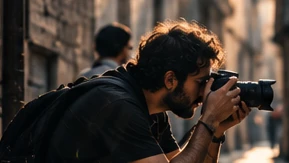
Street photography is often imagined as fast and spontaneous. In practice much of it is patience. The photographer chooses a place because of its light or its geometry, then waits for life to walk into the scene
“The street gives you the stage,” he says. “You just have to stay long enough for the actors to arrive.” On the first evening the light was right but the street was empty. On the second, too many people crossed at once. On the third, everything lined up for less than a second
Ethics in a public space
Photographing strangers raises questions. Who owns a moment that happens in public? Many street photographers follow simple rules: never mock the subject, avoid people in vulnerable situations, and when someone objects, delete the photograph without argument
A good street photograph respects the person in it. If you would be embarrassed to show it to them, it is not a good photograph
What the photographer looks for
- Light that separates a figure from the background
- Lines that lead the eye: doorways, shadows, edges of buildings
- A gesture that tells a story without words
- Something unexpected at the edge of the frame
From one frame to an archive
Over the years, hundreds of such photographs form an archive of the city. Shop signs disappear, buildings are replaced, clothes change. A street photograph that seemed ordinary when it was taken becomes a document of a time that no longer exists
Equipment matters less than most beginners think. The photographer works with a small camera and a single fixed lens, because a quiet camera draws less attention and a fixed focal length forces him to move his feet instead of zooming. He sets the exposure before the scene begins, so that when the moment arrives he only has to press the shutter. Most of his frames are failures, he says, and that is normal: out of a full day on the street, one photograph worth keeping is a good result. The rest are practice for seeing
That is why the photographer prints his best images and shows them to the people of the neighbourhood. Some recognise themselves; others recognise a street they walked down as children
Behind every street photograph there is a story about light, timing and respect. The fraction of a second we see is only the end of that story